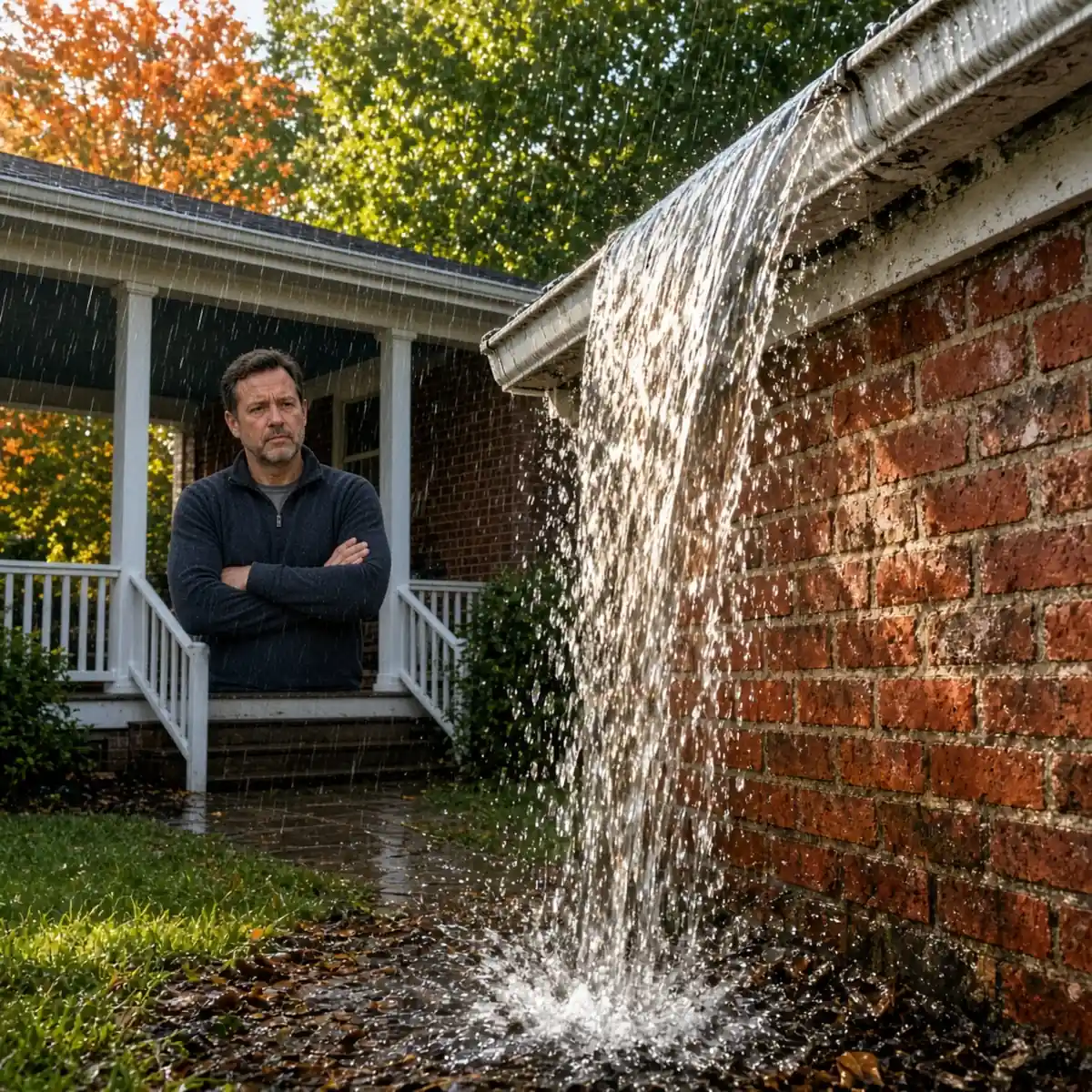
The Three Reasons Gutters Overflow
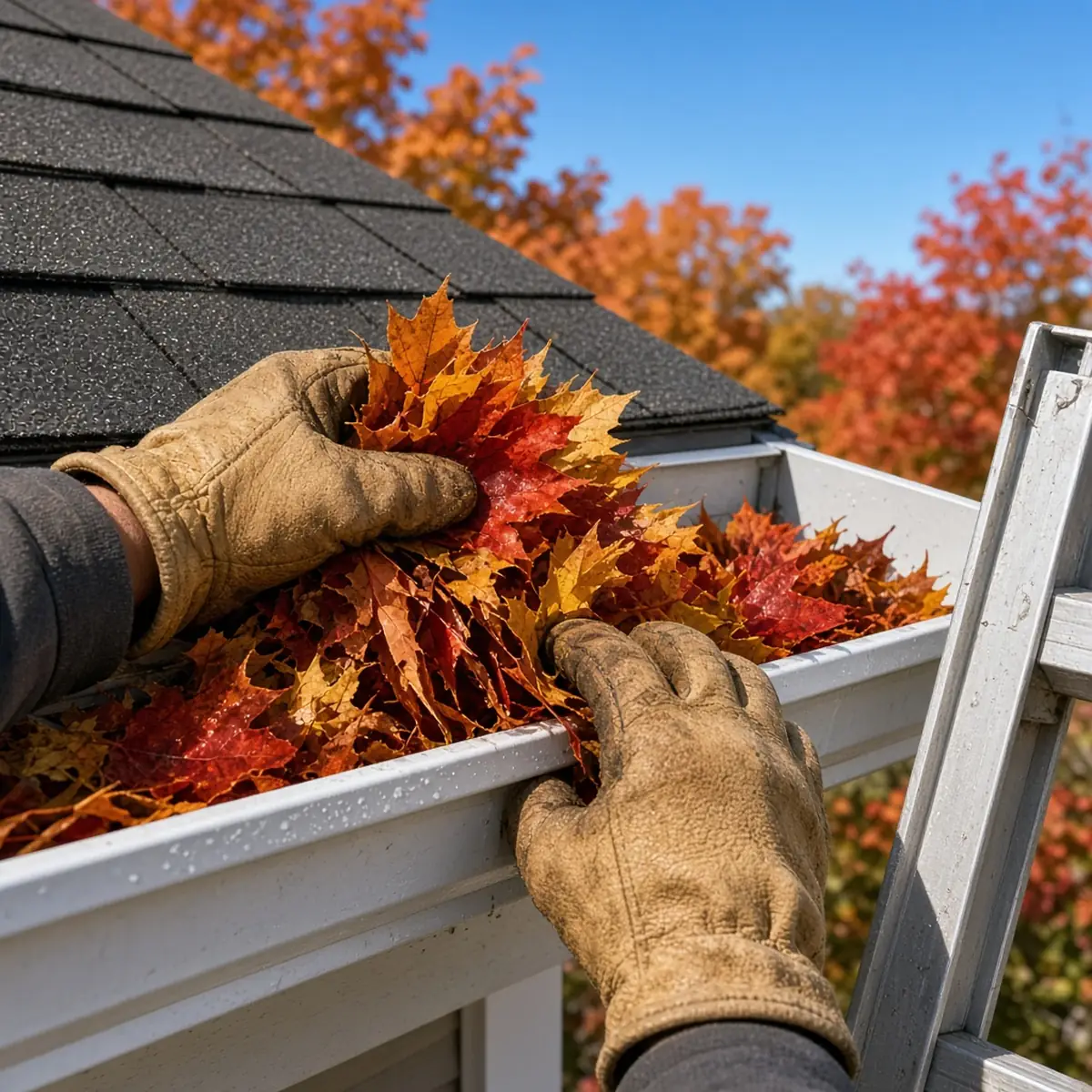
Gutters overflow in heavy rain for one of three reasons: they're clogged, they've lost their slope, or they're too small for the roof. A clog is the most common — leaves and debris block the trough or the downspout, and water backs up and spills. A slope problem means the run has sagged so water pools in the low spot and overflows there instead of draining to the downspout. A size problem means the gutter simply can't carry the volume a big or steep roof sheds in a hard Chicago rain.
Telling them apart is mostly about where and when the overflow happens. A clog overflows at one spot, near a downspout. A slope problem overflows at a sag in the middle of a run. A size problem overflows evenly along the whole length, only in the heaviest rain.
Why This Matters in Oak Park
This matters in Oak Park because the rain here is heavy enough to expose all three. Chicago O'Hare averages 37.86 inches of rain a year, and single storms can be extreme — on July 2, 2023, Oak Park recorded 6.04 inches in a day, with nearby Berwyn hit by 8.96 inches. A 1,500-square-foot roof sheds more than 5,600 gallons in a 6-inch day, and a gutter that's clogged, sagging, or undersized can't move it.
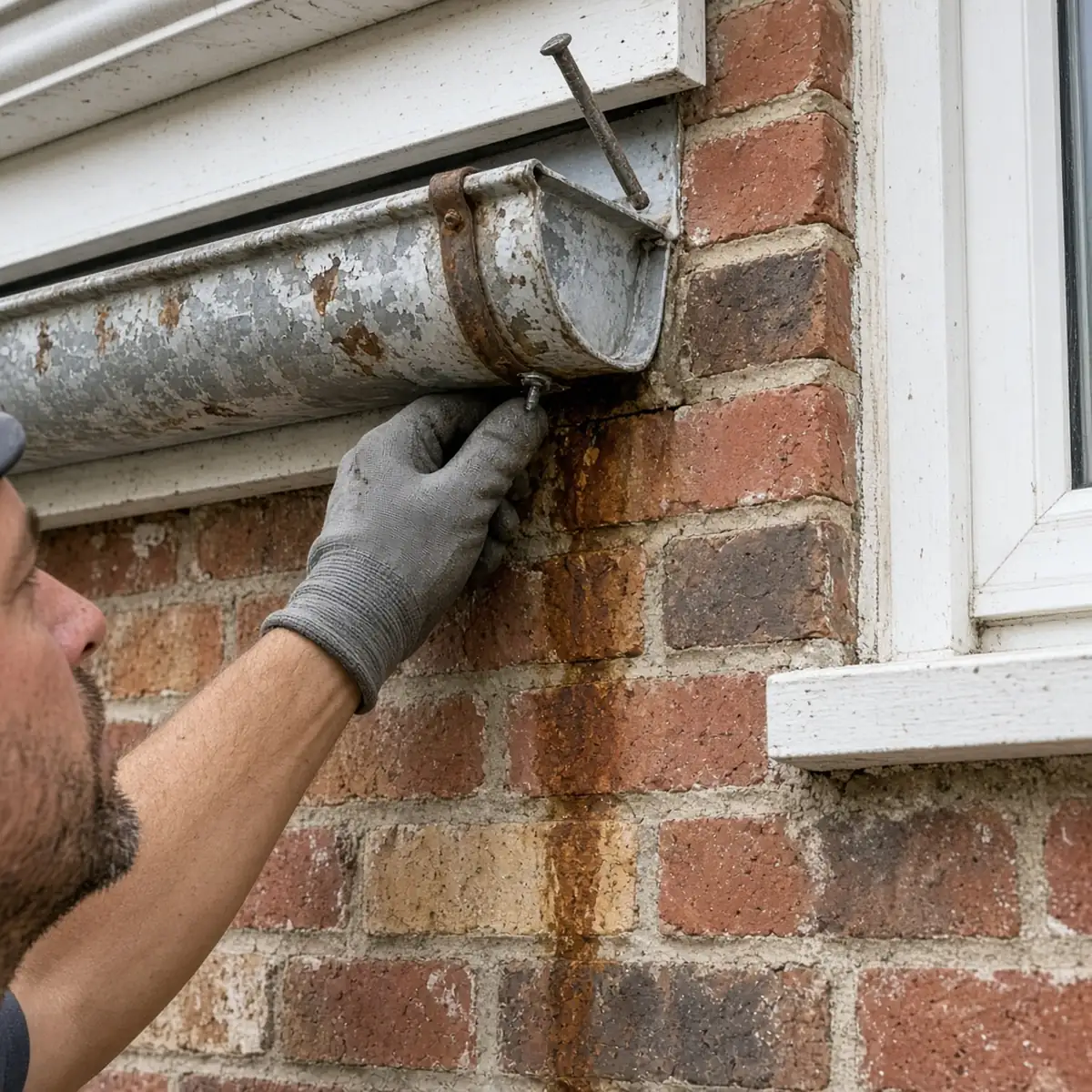
The village's older homes make each cause more likely. Aging gutters sag as spikes loosen, and the heavy tree canopy keeps them clogged, so most Oak Park overflow traces to the first two causes before size ever comes up.
How to Fix Each One
First, rule out the clog: a gutter cleaning that clears the trough and flushes every downspout fixes the most common cause outright. Second, if it still overflows at a sag after cleaning, that's a slope problem — gutter repair re-pitches the run. Third, if a clean, properly pitched gutter still overflows along its whole length in heavy rain, the gutter is undersized, and stepping up to 6-inch trough with 3x4 downspouts through new installation is the fix.
Start with cleaning, because it's the most common cause and the easiest to rule out. If your gutters are overflowing in Oak Park, call 123-456-7890.